
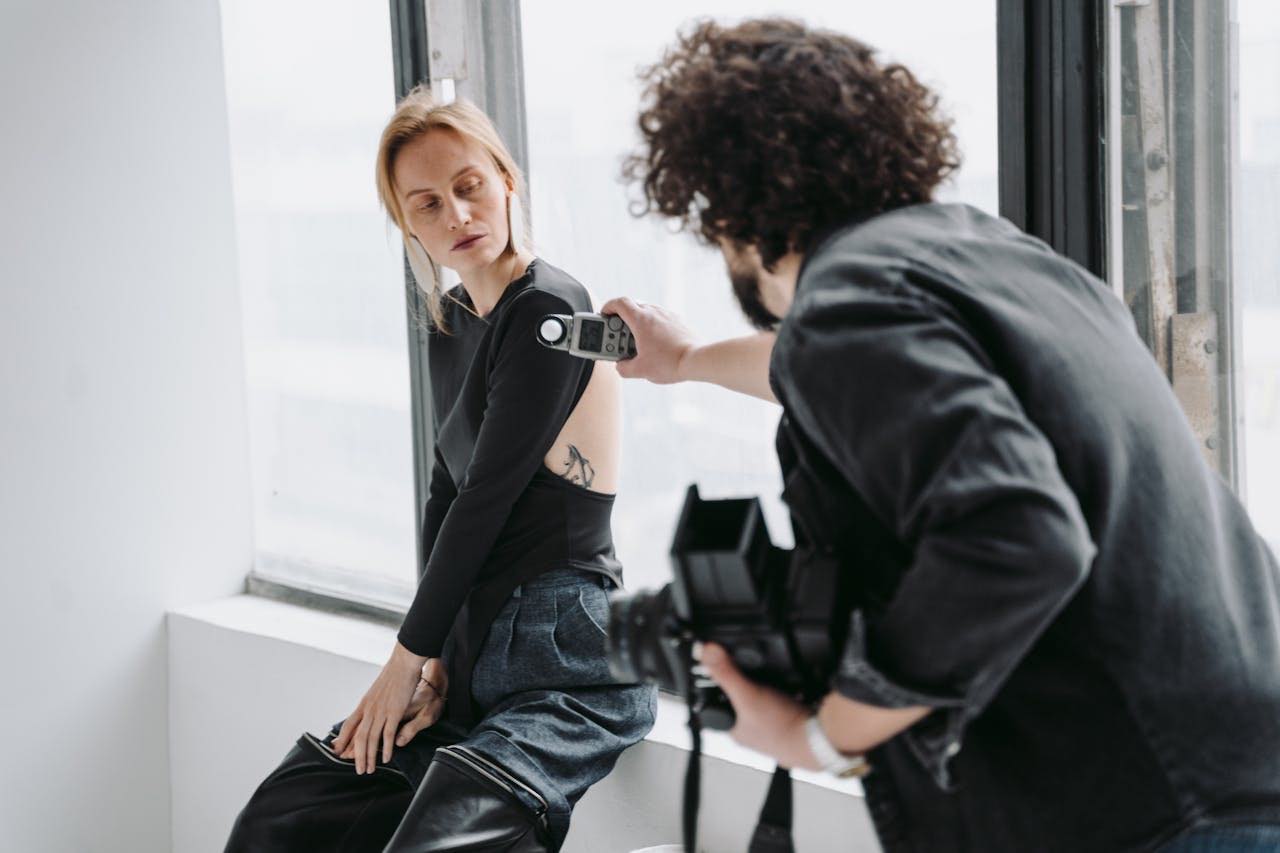
Why Light Meters Are Still Relevant in Modern Photography
Despite technological advances, light meters remain essential tools for many photographers. From studio professionals to film shooters, they offer precision, consistency, and creative control that in-camera metering alone cannot fully replace.
Why Light Meters Are Still Relevant in Modern Photography
In an age where cameras boast sophisticated metering systems, real-time histograms, and AI-assisted exposure modes, it's easy to assume that handheld light meters are relics of a bygone era. After all, if your camera can instantly show you the result, why bother measuring light beforehand? Yet despite technological advances, light meters remain not only relevant but essential tools for many photographers today. From studio professionals to film shooters and fine art practitioners, the humble light meter continues to offer precision, consistency, and creative control that in-camera metering alone cannot fully replace.
Understanding What a Light Meter Really Does
At its core, a light meter measures light objectively. Handheld meters typically measure either incident light (the light falling onto a subject) or reflected light (the light bouncing off a subject). Most in-camera meters measure reflected light only, which immediately introduces a fundamental limitation: they are influenced by the subject's tone and reflectivity. A white dress, a black suit, or a highly reflective surface will all confuse reflected meters unless the photographer compensates. Incident meters, on the other hand, measure the light itself, independent of subject colour. This alone is a powerful reason why light meters still matter.
Consistency: The Professional Advantage
One of the strongest arguments for light meters is repeatability. In professional environments—especially studio photography—consistency is everything. When shooting portraits, fashion, product, or commercial work, photographers often need to reproduce the same lighting setup across multiple sessions, days, or even locations. A handheld meter allows them to measure and record exact light values for each source. The result is predictable, repeatable exposure without guesswork. Relying on chimping (checking the LCD) and adjusting by eye may work for casual shooting, but it's inefficient and unreliable in controlled environments. A meter allows photographers to walk onto a set and dial in correct exposure before taking the first frame.
Essential for Studio and Flash Photography
Perhaps nowhere is the light meter more relevant than in studio and flash-based work. Cameras cannot accurately meter flash output before it fires. While TTL flash systems attempt to solve this, they introduce variability and can struggle in complex scenes. A handheld meter, however, measures flash power precisely, allowing photographers to: Balance multiple light sources accurately Set lighting ratios intentionally Match ambient and flash exposure with confidence Eliminate trial-and-error adjustments For photographers working with manual flash systems, large studios, or mixed lighting, a light meter is not optional—it's fundamental.
Film Photography Demands Precision
The resurgence of film photography has brought renewed appreciation for light meters. Unlike digital sensors, film—especially slide (transparency) film—has limited exposure latitude. Overexpose highlights or underexpose shadows, and the detail is gone forever. Film shooters cannot rely on instant feedback. There's no histogram, no preview, no safety net. A meter provides the confidence that exposure is correct at the moment of capture. Many photographers using vintage or fully mechanical cameras rely entirely on handheld meters. Even modern film shooters often prefer incident metering to ensure consistent results across different scenes and lighting conditions.
Teaching Light, Not Guessing Exposure
Light meters play a crucial educational role. They teach photographers to understand light, not just react to it. By using a meter, photographers learn how light intensity changes with distance, angle, diffusion, and modifiers. They begin to see light as measurable, controllable, and predictable rather than mysterious or intuitive. This understanding translates directly into stronger lighting skills, better exposure decisions, and more intentional photography—regardless of whether the final tool is film or digital.
When In-Camera Meters Fall Short
Modern cameras are excellent, but they are not infallible. In-camera meters can struggle in situations such as: High-contrast scenes Backlit subjects Stage or concert lighting Snow, sand, or very dark environments Mixed lighting conditions In these scenarios, reflected metering often produces inconsistent or misleading results. A handheld incident meter cuts through the ambiguity by measuring the light itself, not how the camera interprets it.
Speed and Confidence on Set
Contrary to the belief that meters slow photographers down, many professionals find the opposite to be true. Instead of taking multiple test shots, reviewing screens, adjusting exposure, and repeating the process, a meter allows photographers to set exposure once and shoot confidently. This is particularly valuable when working with clients, models, or limited time windows. Confidence is contagious on set. When a photographer works decisively, the entire shoot flows more smoothly.
Creative Control, Not Automation
Photography is as much about intention as it is about technology. Light meters give photographers full control over exposure decisions rather than delegating them to automated systems. By choosing how bright or dark a scene should be, how highlights should fall, or how shadows should render, photographers actively shape the image rather than reacting to what the camera suggests. For many artists, this hands-on control is not a limitation—it's the point.
Still Relevant, Still Evolving
Modern light meters are far from outdated. Today's models include features such as: Flash and ambient metering Spot metering Cine and video frame-rate support Bluetooth connectivity Integration with lighting systems They remain indispensable tools for photographers and filmmakers who demand accuracy and control.
Conclusion
Light meters are not obsolete—they are simply misunderstood. While modern cameras are powerful tools, they measure light from a specific perspective that doesn't always align with creative intent or professional needs. For those who value consistency, precision, education, and control, light meters remain as relevant today as they were decades ago. In a world of automation and instant feedback, they offer something increasingly rare: certainty. And in photography, certainty is power.